

July 24
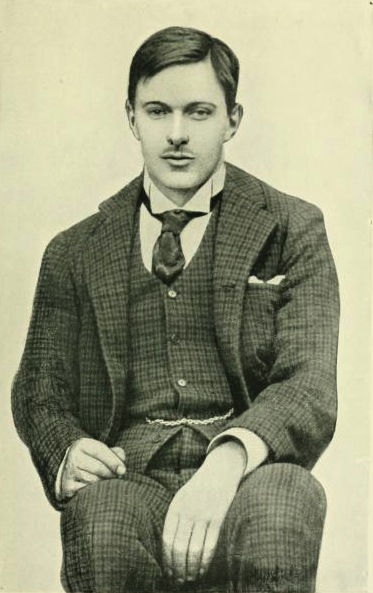
Edward Frederic E.F. BENSON was an English novelist, biographer, memoirist, archaeologist and short story writer born on this date (d: 1940).
Benson's first book published was Sketches from Marlborough. He started his novel-writing career with the (then) fashionably controversial Dodo (1893), which was an instant success, and followed it with a variety of satire and romantic and supernatural melodrama. He repeated the success of Dodo, which featured a scathing description of composer and militant suffragette Ethel Smyth (which she "gleefully acknowledged", according to actress Prunella Scales), with the same cast of characters a generation later: Dodo the Second (1914), "a unique chronicle of the pre-1914 Bright Young Things" and Dodo Wonders (1921), "a first-hand social history of the Great War in Mayfair and the Shires".
The Mapp and Lucia series, written relatively late in his career, consists of six novels and two short stories. The novels are: Queen Lucia, Miss Mapp, Lucia in London, Mapp and Lucia, Lucia's Progress (published as The Worshipful Lucia in the United States) and Trouble for Lucia. The short stories are "The Male Impersonator" and "Desirable Residences". Both appear in anthologies of Benson's short stories, and the former is also often appended to the end of the novel Miss Mapp.
In February 1983 BBC Radio 4 broadcast Trouble for Lucia – a 12-part adaptation by Aubrey Woods of the first four novels. In April and May 2007 BBC Radio 4 broadcast Mapp and Lucia – a 10-part adaptation by Ned Sherrin. In 2008 BBC Radio 4 broadcast Lucia's Progress – a five-part dramatisation by John Peacock of the fifth novel.
Benson is known for a series of biographies/autobiographies and memoirs, including one of Charlotte Brontë. His last book, delivered to his publisher 10 days before his death, was an autobiography titled Final Edition.
H.P. Lovecraft spoke well of Benson's works in his essay "Supernatural Horror in Literature", most notably of his story "The Man Who Went Too Far". Further "Mapp and Lucia" books have been written by Tom Holt, Guy Fraser-Sampson, and Ian Shepherd.
Benson was homosexual, but was intensely discreet. At Cambridge, he fell in love with several fellow students, including Vincent Yorke (father of the novelist Henry Yorke), about whom he confided to his diary, "I feel perfectly mad about him just now... Ah, if only he knew, and yet I think he does." In later life, Benson maintained friendships with a wide circle of gay men and shared a villa on the Italian island of Capri with John Ellingham Brooks; before the First World War, the island had been popular with wealthy homosexuals.
Homoeroticism and a general homosexual sensibility suffuses his literary works, such as David Blaize (1916), and his most popular works are famed for their wry and dry camp humour and social observations.
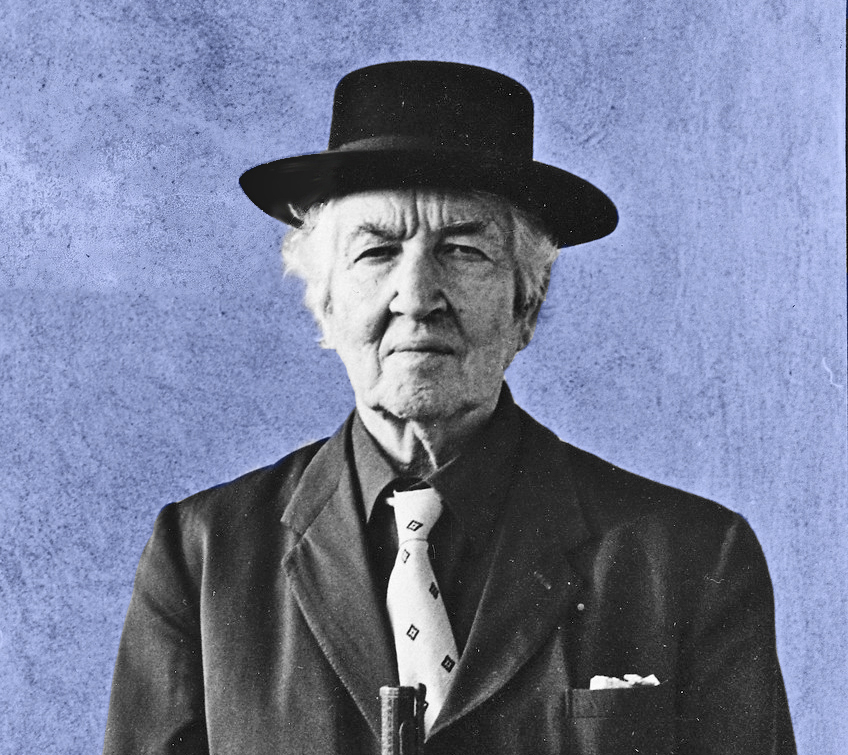
ROBERT GRAVES, English author born (d. 1985) author of The White Goddess and I, Claudius. The White Goddess proposed the existence of a European deity, the "White Goddess of Birth, Love and Death," inspired and represented by the phases of the moon, and who, Graves argues, lies behind the faces of the diverse goddesses of various European mythologies.
Graves argues that "true" or "pure" poetry is inextricably linked with the ancient cult-ritual of his proposed White Goddess and of her son. His conclusions come from his own conjectures about how early religions developed, as there is no historical evidence that the "White Goddess" as he describes her ever figured in any actual belief system. However given that the worship of the Goddess, as defined by Graves, took place in pre-literate and pre-historical times the lack of such evidence is not in itself evidence of lack. Graves described The White Goddess as "a historical grammar of the language of poetic myth."
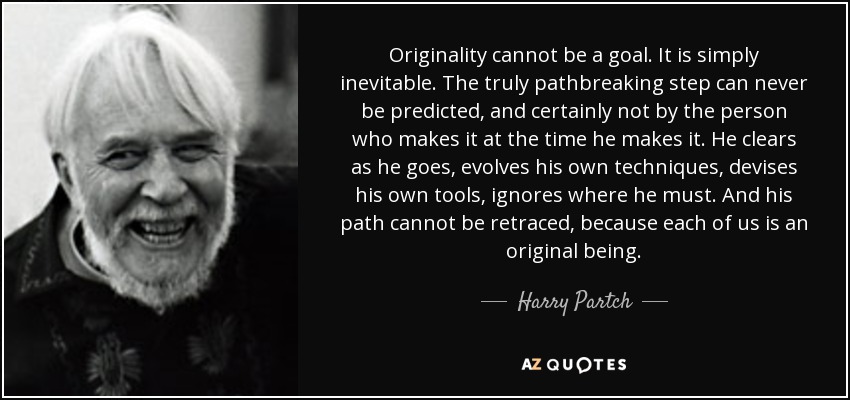
HARRY PARTCH was an American composer, music theorist, and creator of musical instruments born on this date (d: 1974). He composed using scales of unequal intervals in just intonation, and was one of the first 20th-century composers in the West to work systematically with microtonal scales. He built custom-made instruments in these tunings on which to play his compositions, and described his theory and practice in his book Genesis of a Music (1947).
Partch composed with scales dividing the octave into 43 unequal tones derived from the natural harmonic series; these scales allowed for more tones of smaller intervals than in standard Western tuning, which uses twelve equal intervals to the octave. To play his music, Partch built a large number of unique instruments, with such names as the Chromelodeon, the Quadrangularis Reversum, and the Zymo-Xyl. Partch described his music as corporeal, and distinguished it from abstract music, which he perceived as the dominant trend in Western music since the time of Bach. His earliest compositions were small-scale pieces to be intoned to instrumental backing; his later works were large-scale, integrated theater productions in which he expected each of the performers to sing, dance, speak, and play instruments. Ancient Greek theatre and Japanese Noh and kabuki heavily influenced his music theatre.
Encouraged by his mother, Partch learned several instruments at a young age. By fourteen, he was composing, and in particular took to setting dramatic situations. He dropped out of the University of Southern California's School of Music in 1922 over dissatisfaction with the quality of his teachers. He took to self-study in San Francisco's libraries, where he discovered Hermann von Helmholtz's Sensations of Tone, which convinced him to devote himself to music based on scales tuned in just intonation. In 1930, he burned all his previous compositions in a rejection of the European concert tradition. Partch frequently moved around the US. Early in his career, he was a transient worker, and sometimes a hobo; later he depended on grants, university appointments, and record sales to support himself. In 1970, supporters created the Harry Partch Foundation to administer Partch's music and instruments.
Partch met Danlee Mitchell while he was at the University of Illinois; Partch made Mitchell his heir, and Mitchell serves as the Executive Director of the Harry Partch Foundation. Dean Drummond and his group Newband took charge of Partch's instruments, and performed his repertoire. After Drummond's death in 2013, Charles Corey assumed responsibility for the instruments.
The Sousa Archives and Center for American music in Urbana, Illinois, holds the Harry Partch Estate Archive, 1918–1991, which consists of Partch's personal papers, musical scores, films, tapes and photographs documenting his career as a composer, writer, and producer. It also holds the Music and performing Arts Library Harry Partch Collection, 1914–2007, which consists of books, music, films, personal papers, artifacts and sound recordings collected by the staff of the Music and Performing Arts Library and the University of Illinois School of Music documenting the life and career of Harry Partch, and those associated with him, throughout his career as a composer and writer.
Some of Partch's instiruments include: Adapted Guitars and Violas; Cloud Marimba, Bamboo Marimba, the Bass Marimba and the Marimba Eroica; the Diamond Marimba; Cloud Chamber Bowls; the Gourd Tree and the Harmonic Canons; the Quadrangularis Reversum; Kitharas; the Spoils of War and the Zymo-Xyl.
He had a romantic relationship with actor Ramon Novarro.
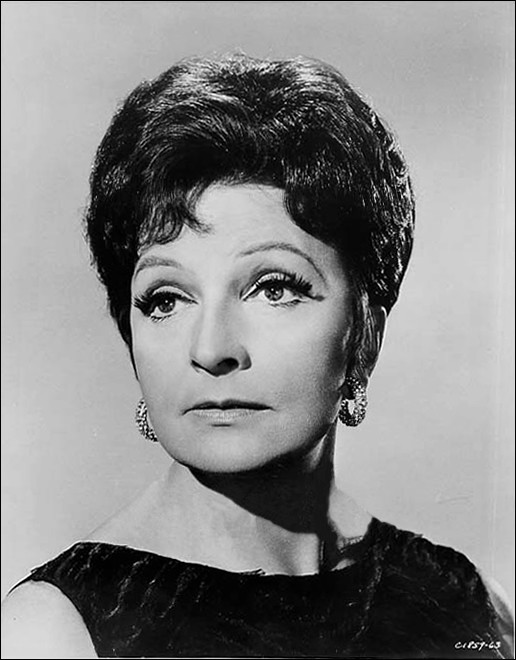
CORAL BROWNE was an Australian-American stage and screen actress born on this date (d: 1991); Her extensive theatre credits included Broadway productions of Macbeth (1956), The Rehearsal (1963) and The Right Honourable Gentlman (1965). She won the 1984 BAFTA TV Award for Best Actress for the BBC TV film An Englishman Abroad (1983). Her film appearances included Auntie Mame (1958), The Killing of Sister George (1968), The Ruling Class (1972) and Dreamchild (1985).
When told by the Royal Shakespear Company that there was no suitable role in their upcoming production of King Lear for her husband, Philip Pearman, she demanded a script and running through it she found the page she was looking for. "There you are", she said, "the perfect part. A small camp near Dover." Browne's language was colorful, and an unauthorized biography of her, This Effing Lady, was published. She was a devout Catholic (by conversion). The two aspects came together in a story of her standing outside Brompton Oratory after Sunday mass when an actor came up to her with gossip about who was sleeping with someone else's wife. She stopped him in his tracks with: "I don't want to hear this filth. Not with me standing here in a state of fucking grace."
Alan Bennett: "When I said to Coral that I’d thought [Cecil] Beaton was gay she remarked, ‘Not when he was with me, darling. Like a rat up a drainpipe.’"
The younger Australian performer Barry Humphries (aka "Dame Edna Everage") paid tribute to Browne at her memorial service with an appropriate poem: "She left behind an emptiness/A gap, a void, a trough/The world is quite a good deal less/Since Coral Browne fucked off.
Her marriage to Vincent Price produced two offspring, including her lesbian daughter Victoria who has declared that while the marriage was a love match, it was also a cover for both her parents bisexuality.
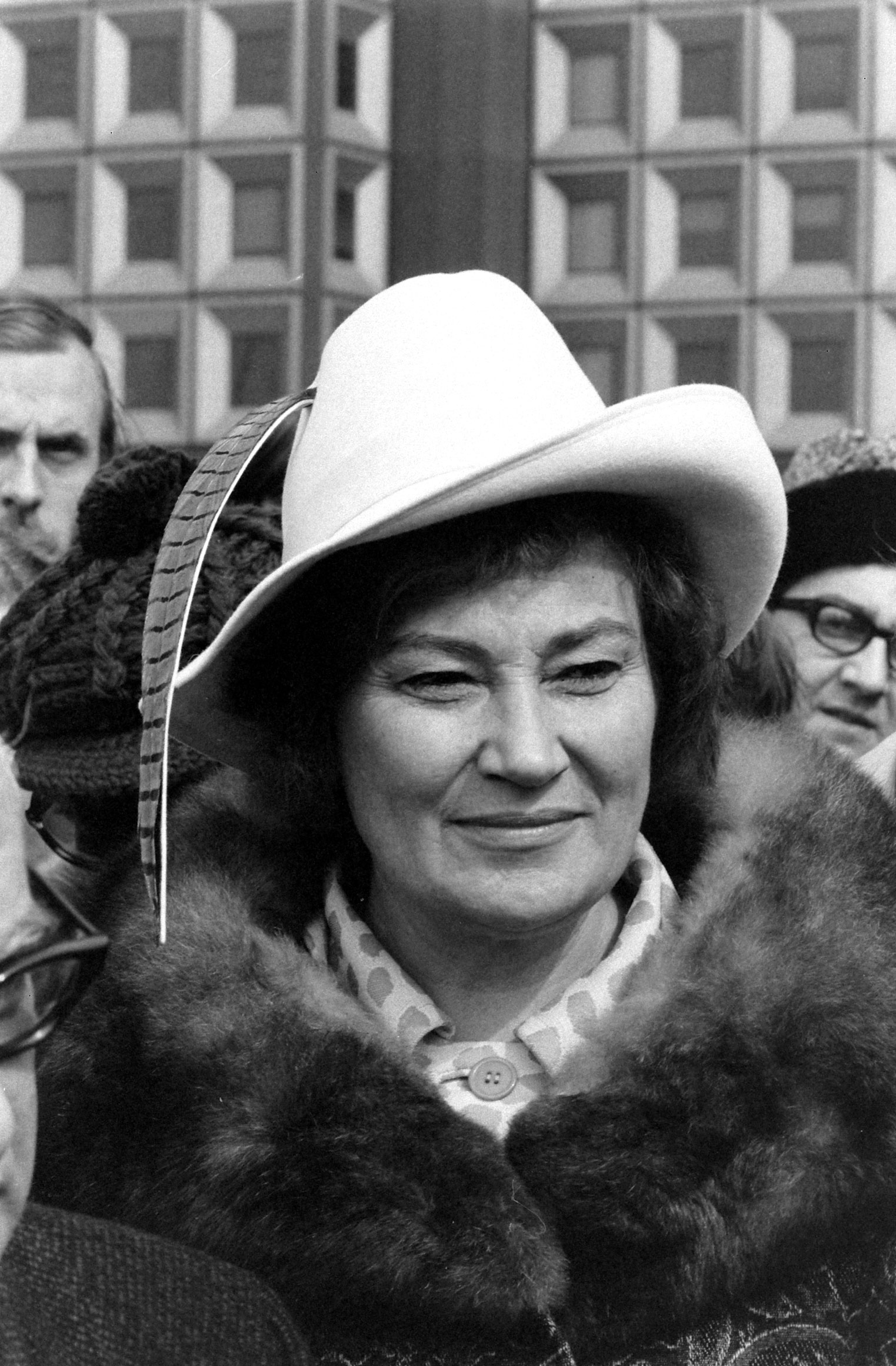
BELLA ABZUG, U.S. Congresswoman from New York born (d. 1998) In addition to her numerous accomplishments in the U.S. House of Representatives (She famously said, "This woman's place is in the House — the House of Representatives," in her successful 1970 campaign to join that body) she was an outspoken supporter of LGBT civil rights. She was one of the first members of Congress to support Gay rights, introducing in 1974, the first federal gay rights bill, the Equality Act of 1974, with fellow Democratic New York City Representative, Edward Koch, the future mayor of New York City.
My personal encounter with her entailed a reception MECLA (Municipal Elections Committee Los Angeles) having for Midge Constanza in Los Angeles. I was doing press for the event, which was being held at attorney Sheldon Andelsen’s luxurious home. This was BC (“Before Cellphones”) and everyone had an answering service (you can Google it). Actual live people who took messages for you…and occasionally made mistakes. In this case the mistake worked in my favor. I called in to pick up my messages and was told that a “Beela Ab…Abzu..” she struggled with the name. And I said “You mean Bella Abzug!?” And she said yes. “Did she leave a call-back number? I asked incredulously. “Yes.”
And so I phoned Bella Abzug and said “Hi…this is Bo Young and I’m returning your call.”
“I’m not recognizing the name…not sure why I called you…” she responded.
And I said, “I thought it might be in response to an invitation to a reception we’re having to honor Midge Costanze this Friday.”
“Oh I love Midge, but I’m not sure I can come. I’m here for Planned Parenthood and they’re going to keep me pretty busy”
So I said, “Well, let me give you the information and maybe you can make it.” And I gave her the address and time etc.
Cut to the party. Scene: A magnificent, ultra-modern, all white mansion. A bedazzling piece of “starchitecture” that said “I’m rich as Croesus.” The room is buzzing with the chatter of people networking and who are well aware they are in such a house, sitting on top of a hillside overlooking Beverley Hills and Bel Air. The horizon pool glistened outside and hot waiters are passing delicious finger food.
And out of the blue I hear a bellowing “Where’s Bo Young?” And I look in the direction of the front door, where the question came from…and there was Bella!. I walked up to her and she took me by the arm and kept me with her for the rest of the party. I was always touched by the way she made sure that everyone there knew who it was that got her there.
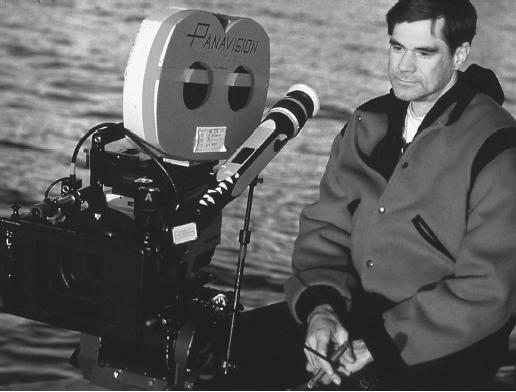
GUS VAN SANT, American film director, born. Openly Gay, he has dealt unflinchingly with aspects of Gay culture and other marginalized subcultures without being particularly concerned about providing positive role models. His filmography as writer and director includes an adaptation of Tom Robbins' novel Even Cowgirls Get the Blues, which features a diverse cast (Keanu Reeves, Roseanne Barr, Uma Thurman, and k.d. lang, with cameos by William S. Burroughs and Heather Graham, among others); and My Own Private Idaho, also starring Reeves as well as the late River Phoenix (Van Sant also planned to direct a biographical film about Andy Warhol with Phoenix in the lead role, but canceled the project after Phoenix's death). He is perhaps best known for directing Good Will Hunting.
At one time he had an option on Tom Spanbauer’s The Man Who Fell In Love With the Moon. His film Milk, a 2008 biopic about the later life and assassination of San Francisco city supervisor/Gay Rights activist activist Harvey Milk (played by Sean Penn) was eventually included on more than thirty Best Film lists and actor Sean Penn received an Academy Award for Best Actor for his portrayal.
In the United States, Milk was given a limited release on November 26, 2008, and expanded to additional theaters each of the following weekends to a maximum of 882 screens. The film made the top 10 box office list on its opening weekend with earnings of $1.4 million in 36 theaters. At the box office, the film more than doubled its production cost of $20 million. However, its long-term box office receipts were relatively poor.
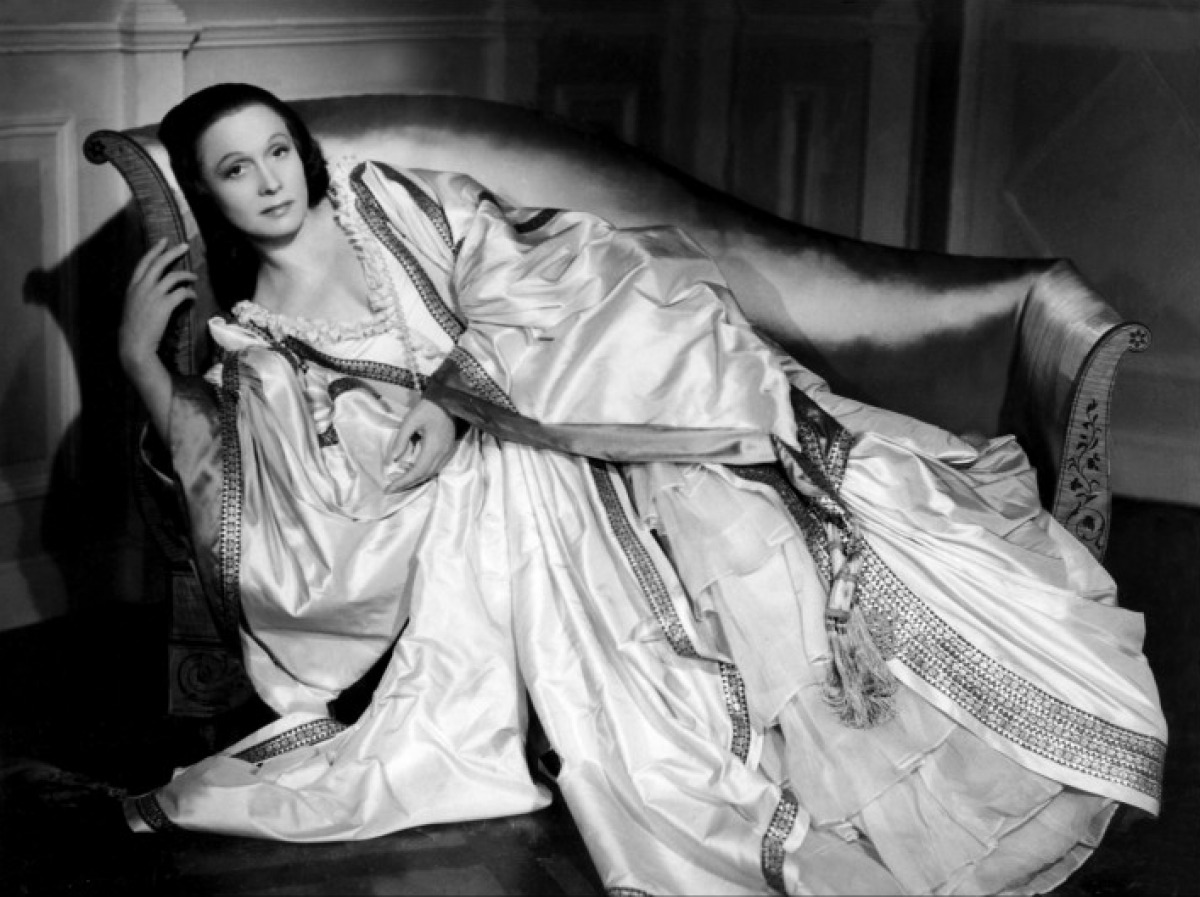
ARLETTY, French singer and actress died (b. 1898); In 1945 Arletty appeared in her most famous film role, the part of Garance in Marcel Carnes Les Enfants du Paradis. Arletty was imprisoned in 1945 for having had a wartime liaison with a German officer during the occupation of France; it was this very liaison, however, that enabled Carné to film some of the brilliant street scenes of Les Enfants du Paradis. She allegedly later commented on the experience, "My heart is French but my ass is international."
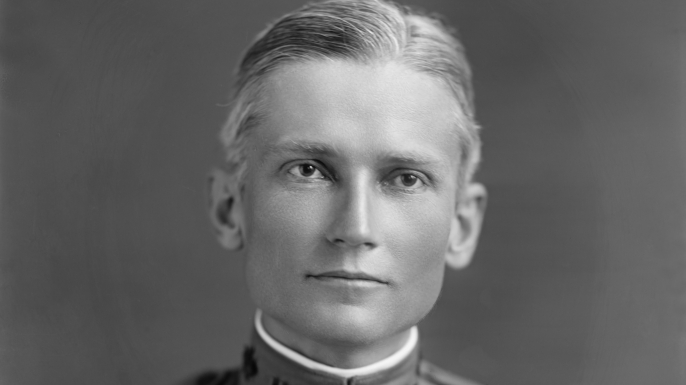
HIRAM BINGHAM III "re-discovers" Machu Picchu “Lost” City of the Incas". Whoever left their intricately stone carved city of about 1,000 at 11,000 feet above the Urubamba River, please use the White Courtesy telephone.
Bingham is credited with becoming the first outsider, in 1911, to visit the ruins of Machu Picchu, the now-famous Inca settlement in the Peruvian Andes that was built in the 15th century and abandoned around the time of the Spanish conquest of the Inca Empire in the 16th century. Born in 1875 to Christian missionaries in Hawaii, Bingham earned a Ph.D. from Harvard and married a Tiffany & Co. heiress, whose wealth helped fund his expeditions. In 1911, Bingham, then a Yale University faculty member specializing in South American history, was in Peru searching for Vilcabamba, the last Inca outpost before it fell to the Spanish, when he encountered a local farmer who directed him to the ruins of Machu Picchu. Although the site was known to peasants living in the region, its existence had never been publicized. Bingham, who returned to Machu Picchu (meaning “old peak” in Quechua, one of Peru’s native languages) in 1912 to conduct a major excavation and made a third visit to the area in 1914-15, documented his sensational findings in a series of articles and books. Although some experts later contended that missionaries and other non-locals might have visited Machu Picchu before Bingham, he was the first to conduct a scientific exploration of the site.
In addition to his days as an explorer, Bingham commanded a flight school in France for the American military during World War I then went on to represent Connecticut in the U.S. Senate from 1925 to 1933. He died in 1956. In 2010, after a lengthy custody dispute, Yale University reached an agreement with the Peruvian government to return thousands of artifacts Bingham had excavated from Machu Picchu.
Subscribe to Gay Wisdom
Would you like to have Today in Gay History (aka Gay Wisdom) sent to you daily?